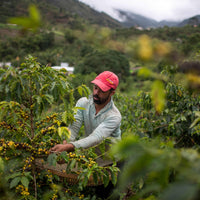

If you've ever picked a coffee cherry off the tree, you'll know something that most coffee drinkers never think about: the bean is not the fruit. It's the seed inside the fruit. And for over a century, the fruit itself, the skin and pulp surrounding that seed, has been treated as waste.
Cascara is what happens when someone decides that waste is actually a product.
What Cascara Actually Is
"Cascara" is Spanish for husk or peel. In coffee terms, it refers to the dried skin and pulp of the coffee cherry, the part left over after the seeds (what we roast and grind into coffee) are removed.
During coffee processing, cherries are picked, then the outer fruit is stripped away from the seeds through washing, pulping, or natural drying. Historically, that stripped-away fruit was discarded, composted, or left to rot in piles near processing stations. Cascara is that byproduct, dried and preserved instead of thrown out.
Steeped in hot water, it makes a tea-like drink, reddish-brown in colour, that tastes nothing like coffee. Expect notes of dried hibiscus, rosehip, tamarind, and dark cherry, with a natural sweetness and light tannic bite similar to a fruit tea or a very light black tea.
Why It's Good
It's a genuinely different drink, not a coffee substitute. Cascara contains a small amount of caffeine (roughly a quarter to a third of what's in a coffee), but the appeal isn't a caffeine hit. It's the flavour: bright, fruity, lightly tart, without any of the bitterness or acidity people associate with coffee.
It reduces waste in the supply chain. Coffee cherries produce far more pulp by weight than usable beans. For a long time, that pulp had no commercial use and was simply discarded, sometimes creating environmental problems when it was dumped in large quantities near water sources. Turning it into a sellable product gives producers another revenue stream from the same harvest and reduces the volume of organic waste that needs to be managed.
It supports the farmers who grow coffee. Because cascara is a byproduct of a crop that's already being harvested, producing it requires no additional land, water, or growing time. Any income it generates is close to pure upside for a coffee farm, on top of what they already earn from the beans.
It's naturally caffeinated and lightly sweet without added sugar. As a brewed tea, cascara needs little to no sweetening. The fruit itself carries enough natural sugar and body to stand on its own.
How It's Made
The process starts the moment coffee cherries are harvested; making cascara depends entirely on what happens during processing.
Drying. After the fruit is separated from the seed (via washing, pulping, or natural sun-drying methods), the leftover skins and pulp are spread out and dried, usually in the sun on raised beds or patios, similar to how coffee itself is dried. This step is critical: dried too fast, the cascara can taste flat; dried too slowly or unevenly, it can mould or ferment in ways that ruin the batch.
Sorting and cleaning. Once dry, the husks are sorted to remove debris, damaged pieces, and any stray coffee parchment or seed fragments, since quality control at this stage affects both flavour and safety.
Packaging. The dried cascara is packaged whole (as loose husks, similar to loose-leaf tea) or in tea bags. Some producers also grind or process it into syrup, which is made by simmering the dried cascara in water, then reducing that liquid with sugar until it thickens, in much the same way you'd make a fruit cordial or simple syrup.
Brewing. To drink cascara as a tea, steep the dried husks in hot water (not boiling) for several minutes, longer than a typical tea steep, since the tougher, drier plant material needs more time to release its flavour. It can be served hot or cold, and holds up particularly well over ice.
Cascara Syrup
Cascara syrup takes the same base ingredient and turns it into something more versatile: a concentrated, pourable sweetener with all of cascara's fruity character, built for cocktails, lattes, sodas, and drizzling over desserts.
It's made by simmering dried cascara in water to extract its flavour and colour, straining out the solids, then combining that liquid with sugar and reducing it down to a syrup consistency. Some versions add a touch of acid, like lemon juice, to balance the sweetness and help preserve the syrup.
The result keeps well in the fridge for weeks and works as a drop-in substitute anywhere you'd use a fruit syrup: stirred into sparkling water, swirled into a latte for a coffee-cherry twist, or used in cocktails where its dried-fruit, tamarind-like depth pairs well with rum, whisky, or gin.
Worth Trying
Cascara is a good reminder that coffee is an agricultural product with more than one useful part. If you've only ever had the roasted seed, cascara offers a completely different way to taste the same plant, and a small way to make sure less of what's grown goes to waste.