

Most of the time, when two coffees taste different, there's more than one reason why. Different farm, different altitude, different process, sometimes all three at once. Untangling which decision did what to the cup is guesswork more often than not.
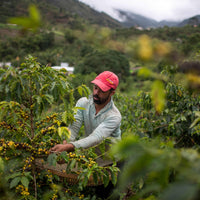
Every so often a farm hands you a cleaner experiment. Guillermo Lomas runs Finca La Carolina in Nanegal, Pichincha, a ten hectare farm where he grows several cultivars for quality rather than volume. One year we bought two lots from him: a Sidra and a Typica Mejorada. Same farm, same 1375 metres, same washed process down to the detail. Cherries picked ripe, floated and sorted, depulped on the farm, then dry fermented in tanks to break down the mucilage before being washed clean through the channels. Guillermo dries both slowly on raised beds, turning the parchment by hand so it dries evenly, keeping the beds covered from rain.
Nothing about how these two coffees were grown or processed pulls them apart. Whatever separates the cups comes down to the cultivar alone.
The Sidra came out rounder and sweeter. Roasted almond and caramel sat at the base, with dried fruit and brown spice behind them, and fresh pomelo cutting through a body that was properly creamy. It finished on toffee, with that brown spice returning as the cup cooled.
The Typica Mejorada took the same farm somewhere else entirely. Fragrant hedgerow florals and mandarin orange sat over a caramel sweetness that never really left. The body was silky rather than creamy, the acidity juicy and bright without any bite to it, and as it cooled there was green apple, more pomelo, and a trace of red berry.
Pomelo turned up in both cups. Everything around it belonged to the cultivar. One coffee sweetened toward toffee and spice. The other lifted toward florals and citrus. Same farmer, same picking day, same tanks, same drying beds.
This is the kind of side-by-side worth doing whenever a farm offers it. Brew both the same way, back to back, and you get a rare thing in coffee: a variable held still enough to actually taste what it isn't.