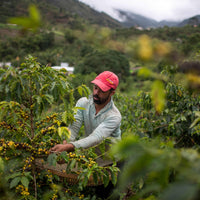

Green coffee has crossed oceans in jute sacks for as long as anyone has shipped it. Jute breathes, and for a long stretch of coffee history that was the point. The humid sea voyages that mellowed raw beans in the hold are what gave us curiosities like Monsooned Malabar and Old Brown Java, coffees people came to love for the soft, low acidity character the journey left behind. These days only Monsooned Malabar still does it on purpose, and India’s micro-lot coffees are a world apart.
For a modern specialty coffee, that same breathability works against you. Over the weeks or months a container spends at sea, the beans take on whatever the surrounding air is doing: humidity that climbs and falls, temperatures that swing from a hold in the tropics to a dockside in Leith. Oxygen works away at the coffee the whole time. The bright acidity and delicate top notes a producer tasted on the cupping table at origin fade a little with every week in transit.
There is a way to slow that down, and more producers are using it. Vacuum packing, done once the coffee has rested.
The science of vacuum packing green coffee
Coffee is not ready to seal the moment it comes off the drying patio. It needs to rest, and its water activity needs to settle to a stable point, somewhere around 0.55 to 0.65, with moisture down near 11 per cent. Seal a lot before it has stabilised and you trap moisture and a little oxygen against the bean. The result is flat, leathery cups and a real risk of taints, exactly what vacuum packing is meant to prevent. Time it right and the story is different.
Pull the air out of a high barrier bag and two things settle into place. Almost all the oxygen that drives staling is gone, so the slow oxidation of the coffee’s lipids and organic acids nearly halts. And the moisture level the producer worked to hit on the patio holds steady, sealed off from the damp and dry spells of the journey. The moisture side is well documented. A 2023 study in Scientific Reports followed green coffee in jute and in hermetic barrier bags across a full year, and the barrier bags held their water activity almost flat while jute-stored beans in warmer conditions drifted below safe levels within six months. Vacuum packing uses the same kind of barrier and takes the air out on top of it. For a rested lot kept cool and dark, that is what keeps a coffee tasting close to the way it did at origin months later.
It helps to know what vacuum packing does and does not do. It slows the clock rather than stopping it, and it removes almost all of the oxygen rather than every last molecule. Some research even suggests jute holds on to certain volatile aromatics a little better than sealed packaging in some conditions, since those compounds linger in the air a breathing sack lets move. For a high value lot crossing the Atlantic, the balance still falls comfortably on the side of sealing. The moisture stability and the protection from oxidation matter far more than a marginal aromatic effect.
The competitions set the standard
Vacuum packing high value coffee did not begin as a marketing idea. It came out of the competition circuit, with Cup of Excellence leading the way. COE ships its winning lots vacuum-sealed, usually two 15kg bags inside a 30kg box, and charges bidders a set fee per pound for the vacuum packing on top of the auction price. When a single lot can sell for tens of dollars a pound, nobody wants it fading in a jute sack on the way to the buyer. Sealing the coffee protects the exact profile the judges scored. Once the best coffees in the world started travelling this way, the practice spread to microlots everywhere.
Why our rare coffees come vacuum packed
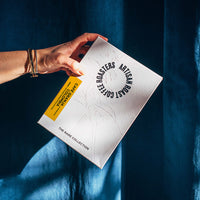
It is the same story across The Rare Club. The quality minded producers we work with vacuum pack these lots at origin, because a small, high value coffee is worth protecting all the way to the cup. That care at source is why the coffee reaching Edinburgh is still the coffee the producer sent, not a tired version of it.
Two competition lots from COCARIVE
Both of our new Brazilian naturals reach us through COCARIVE, the Cooperativa Regional dos Cafeicultores do Vale do Rio Verde, based in Carmo de Minas in the Mantiqueira de Minas region. Each year the co-op runs its own quality competition, judged by Q-graders, to find the standout lots from the region’s high altitude farms. Out of dozens of entries this year, ours finished near the top. At that end of the table the gap in quality is slender, a point or two on a score sheet rather than anything you would notice in the cup, so we bid on the two we thought our customers would love. Sítio São Francisco took second place, Rancho São Benedito fourth. COCARIVE vacuum-packed both at processing, once rested, to hold those profiles intact all the way to Scotland.
Sítio São Francisco Natural (2nd place)
Grown high in Carmo de Minas, this is a lot built on fruit clarity and sweetness. Soft stone fruit and ripe nectarine, a silky mouthfeel, a clean caramel finish. Bright and articulate. It makes a lovely pour-over, and a sweet, clean filter.
Shop Sítio São Francisco Natural
Rancho São Benedito Natural (4th place)
From a family estate that dates back to 1954, this is classic Brazil taken to competition level. Deep milk chocolate, roasted almond, a creamy and full body. It goes just about anywhere: Aeropress, French Press, espresso, or with milk.
Shop Rancho São Benedito Natural
Taste it
Both coffees are on the webshop now, whole bean or ground to your brew, and in all four Artisan Roast cafés in Edinburgh while the microlots last.