fincahartmannmappanama.webp

The coffee of Northern Panama is an evocative combination of very high quality, unique landscapes and environmental sustainability. The towering active Volcán Barú forms the basis for this to happen and coffee thrives symbiotically with nature on the lower slopes of the mountains national park. Coffee farms take this symbiosis importantly and commitments ranging from the growing a diverse range of cultivars, implementing solar power generation, reducing water use are all common examples of their sustainable approach.

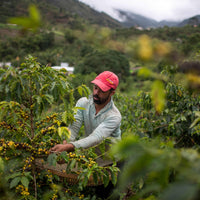
Finca Hartmann is a farm that has captured the essence of this reputation. The family care deeply for the natural environment maintain 75 hectares of virgin rainforest on their land, the coffee thriving alongside this diverse natural flora.

fincahartmannpanamachart.webp

We’ve opted for extending caramelisation through the roast to bring a dessert leaning profile with good structure and depth to the Catuaí from Hartmann. Milk chocolate praline and amaretti biscuit sit at the centre of the flavour profile, supported by gentle notes of ripe forest fruit and cherry. A malt biscuit sweetness supports the cup, while a light candied lemon zest adds structure and balance. As it cools, the texture becomes more apparent. It’s smooth, dense and creamy land leads through to soft brown spice notes on the finish that enhances the praline notes.


Delicious as an aeropress or French press, this coffee makes a supremely balanced espresso full of dense chocolate and almond praline goodness. A classic 1:2 ratio is a great starting recipe. Our lab set up of a La Marzocco GS3/VST18g basket/K30 grinder brewed:

Ratio: 1 : 2.22 ratio / 18g : 40g @ 94.0°C
Brew time: 29 - 31 seconds
TDS: 9.5%
Extraction: 21.88%

If you’re not sure about ratios this means ‘dry coffee weight: brewed coffee weight’. Weight is a more consistent way of measuring than volume and we always recommend using an inexpensive set of digital scales that have 0.1g resolution when brewing at home.

fincahartmannpanamaillustration.webp

The farm is split across five distinct areas with 5 siblings each looking after one part. This microlot comes from the Santa Cara part of the farm looked after by Aliss Hartmann. Santa Clara has more traditional Arabica cultivars planted, such as this Catuaí.
The cool, moist forest canopy extends the cherries' ripening phase, even at this more medium elevation, developing complex sugars that are crucial to the to the roasted coffee's sweetness.

This extended ripening process combined with a pre-ferment before de-pulping creates a coffee layered with moreish flavours ideal for espresso. A final phase of low-temperature mechanical drying represents a rare and subtle approach to preserving this washed coffee’s delicate flavours

You may also like