
Coffea arabica first grew wild in the forests of south-western Ethiopia, and the country still holds more of its genetic diversity than anywhere else. This genetic wealth stretches through to the southern highlands and defines the recognisable character of Ethiopian coffee. Modern Ethiopian farming combines a mix of landrace varieties, local to each region, alongside Jimma Agricultural Research Centre (JARC) selections. These JARC selections are Ethiopian cultivars in their own right, taken from mother trees in the south-west and now planted across the country’s wider coffee regions. 74158 is one of them, developed from a mother tree in the coffee forests near Metu, Illubabor.


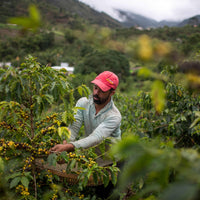
74158 has travelled east and south since. Sidama is one of the regions where farmers now plant it, and Hamasho is one of the villages. This lot comes from Arara Farm in Hamasho, in the northern reaches of Bensa Woreda, at 2,200 metres. Up here the microclimates shift from ridge to ridge, mist drifts in off the escarpment most mornings, and the Logita river runs through the valleys below. The altitude here slows everything down with coffee cherries filling out over months rather than weeks, and sugar collecting in the fruit rather than fuelling growth.

AraraEthiopia-02.jpg

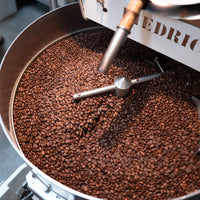
We roast Arara light on our fastest roast profile with filter brewing in mind. This brings enough heat to open the aromatics without adding roast character to mask. Dried mango comes through first over a dense base of allspice sweetness that holds layers of flavours in place. Coconut, banana and ripe apricot combine effortlessly and delicate florals build through cooling. A pink grapefruit acidity, juicy rather than sharp, lifts the cup and leads onto a winey and integrated finish, carrying the fruit forward rather than cutting it off. The mouthfeel is viscous but open, closer to sugar syrup than a creaminess.

AraraEthiopia-01.jpg

The Arara farm is part of the Duka project by Daye Bensa, our exporter in Ethiopia. Duka gives the team room to process individual cultivars and work with modern post-harvest techniques, lot by lot. The processing is where this becomes a rare selection, beyond that of a classic natural Sidama. Ripe cherries go into sealed, oxygen-free tanks for 120 hours. Without oxygen, the microbial work shifts to lactic and acetic routes. That shift is where anaerobic coffees get their deep sweetness and their winey finish. Then the second move helps create and define the flavour profile further. The cherries dry inside a temperature controlled dark room, not out on raised beds in the sun. The dark slows the drying and holds the temperature even, keeping the fermentation character in place rather than cooking it off the surface at raised temperatures. What comes out when dried is a flavour profile that has Sidama terroir carried through a long, controlled fermentation. The fruit and the florals still legible under a deeper sweetness and a winey edge.


you might also like: