
elvenadocostarica.webp

Costa Rica's West Valley is synonymous with honey processing in coffee, and arguably the place where the method first found widespread global recognition. Developed in response to forward-thinking countrywide rules designed to minimise water use at wet mills, the process is based on keeping as much of the coffee fruit mucilage on the seed as possible. With altitudes lower than the Tarrazú region, the West Valley micro-mills wholly embraced honey processing as a way to innovate, build flavour, and experiment with new techniques in coffee farming.

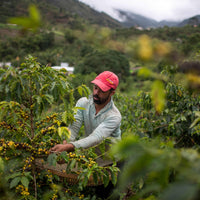
One standout example is Cerro San Luis Micromill, a family-run business in Grecia, West Valley. The Delgado family, led by siblings Alexander and Magali, own a couple of small farms and a tiny mill that processes traceable nano-lots of high-quality coffee on hills that run down from the Poás. The family's dedication to innovation sees them experimenting with diverse cultivars and processing methods to produce some of the region's finest coffees.

elvenadocostaricaflavourchart.webp

Maple syrup and molasses form a dense and sweet base. Over this, classic SL-28 cherry cola stone fruit, grapefruit citrus, and the maple syrup from the processing add brightness and sweetness, each note sitting clean above the base. The acidity is more present than a West Valley yellow honey typically delivers, structured rather than sharp, and there is something recognisably SL-28 in the way this coffee tastes. The mouthfeel is full and the finish is long.

elvenadocostaricaillustration.webp

The Los Cercas lot is one expression of that experimentation. SL-28 is best known as a selection from Kenya. Back in the early 2000s it arrived at Cirri Sur, close to Cerro San Luis, and has spread across West Valley micro-mills since. At the same time Alexander started the family micromill from scratch with wooden stakes, zinc sheeting, a small loan, and a single depulper. People told him quality was fixed. Honey and natural processes proved otherwise: scores improved, and new markets opened that the cooperative had never reached. For the yellow honey, they depulp the cherry and leave the mucilage coat intact on the parchment. Yellow honey, at the lighter end of the honey range, leaves enough mucilage to build sweetness and body through the drying stage, less than a red or black, keeping fermentation lower and the profile cleaner. The care at Cerro San Luis shows. No fermented character, no roughness. Just the sweetness and creamy texture this process can deliver.

The altitude gives the cherries time to develop, and the Delgados' approach at the mill does the rest. The Los Cercas lot is not a coffee trying to make an impression. It simply delivers what it promises: clean, sweet, and carrying that mouthfeel from start to finish.


you might also like: