
How a cooperative on the slopes of Mount Elgon is restoring one of Africa's quietly great coffee origins - and why Jackie Nafuna's name is on the bag
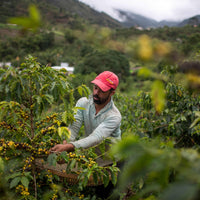
There is a valley on the western slopes of Mount Elgon where coffee trees grow under the shade of banana plants and African hardwoods. At 1,300 to 2,000 metres above sea level, the air is cooler than the plains below and the fruit develops slowly. Smallholder farmers here intercrop their coffee with beans, cassava, and ginger - a system that has sustained families on this mountain for generations.
This is not a new coffee origin. That is part of what makes it interesting.
A brief history of a very old mountain
Mount Elgon is one of the oldest extinct volcanoes in East Africa. Its soils are volcanic and deep. Its altitude is real, not aspirational. Arabica was first planted on the mountain in the 1920s, brought from Kenya, and by the 1950s coffee from the Bugisu sub-region of eastern Uganda had built a genuine reputation. Buyers noticed it. Quality was consistent.
Then came the 1970s. Political instability, economic collapse, and decades of disruption dismantled what coffee producers on Elgon had spent thirty years building. The infrastructure broke down. The incentives went. Farmers kept growing, but the supply chain that connected them to quality-conscious buyers largely stopped working.
The reputation faded. Uganda became better known for Robusta - grown in the lowlands, sold into commodity blends - than for the Arabica that had once put Bugisu on the specialty map.
That is the history. What is happening now on Elgon is, quietly, the reversal of it.
The Coffee Gardens
In 2017, The Coffee Gardens set up in the Bukyabo Valley in Sironko, on the foothills of Mount Elgon. The model was direct: work with individual smallholder farmers, understand their needs, improve farming practices, and build a micro-processing station to control quality from cherry to export.
The station opened in late 2018. With it came traceability - a mobile app tracking each batch from garden to bag - and a set of processing practices built around consistency and cup quality rather than throughput.
The farmers they work with grow traditional cultivars: Nyasaland, SL14, and SL28. The SL varieties were developed in Kenya in the 1930s and 40s and have been on Elgon long enough to feel native. They carry bright acidity and enough body to hold a complex flavour profile. On this mountain, at this altitude, they perform.
The Coffee Gardens partners with Vi Agroforestry, who provide sustainable farm management training. Farmers are paid above market prices for higher cup scores — which creates a real incentive to improve at farm level, not just at the processing station. The community around the station receives purified water and fertiliser made from coffee waste.
This is not charity. It is an economic model designed to work in both directions. The farmers who produce the best coffee earn more. The buyers who want traceable specialty coffee from a region with a complicated history get something with real provenance behind it.
Jackie
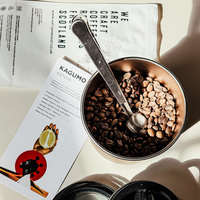
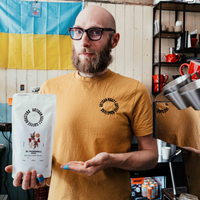
The coffee we stock is a nanolot — a very small, specifically defined lot within the broader cooperative output. It is named after Jackie Nafuna.
Jackie joined The Coffee Gardens as a picker. She understood the work from the ground up: cherry selection, the relationship between ripeness and cup quality, what it actually takes to produce consistent results in a field setting. Over time she moved through the organisation and now runs her own team as Field and Processing Officer.
The washed process used for this coffee was her idea.
It is worth staying with that for a moment. The process is specific: freshly picked, ripe cherries are pulped, then submerged in water and fermented with fresh pulp — not dried cascara — for twenty-three hours. After fermentation, the coffee dries on covered raised beds and is hand sorted before export. Each step is deliberate and each step has a direct effect on what you taste.
The pulp used during fermentation is fresh, taken from the same day's cherry. This is not incidental — it changes the character of the fermentation and, with it, the character of the cup. Jackie designed this method and The Coffee Gardens built the process around it.
The naming of the lot after her is the cooperative recognising something real. This is not a marketing decision dressed as gratitude. Jackie's knowledge of this mountain, this cherry, this fermentation is what produced the coffee in the bag.
What it tastes like
Medium roasted. The roast sits where it should for this coffee: warm enough to develop the butterscotch and roasted almond at the centre, controlled enough to keep the mandarin acidity clear and the dried fruit character intact.
Butterscotch and roasted almond give the cup a toasted, warming foundation. Golden raisins sit underneath — not sweet in a candied way, but dried and specific, the kind of sweetness you notice rather than reach for. The mouthfeel is full and carries real weight.
The mandarin orange acidity is the balancing note. Bright but not sharp. It holds everything together without pulling the cup in a different direction. The finish is long: brown spice and a fresh coffee fruit afternote that lingers past the cup.
On a V60 at 94 to 96 degrees, with 18g to 300g water across four pours, the butterscotch and almond come through cleanly in the middle of the cup. The mandarin arrives at the end and stays. Brew it that way at least once before you decide on anything else.
Why this origin matters now
Uganda Arabica is underrepresented in the specialty market relative to what the mountain is capable of producing. Most buyers still associate Uganda with Robusta. The cooperatives now working on Elgon — The Coffee Gardens among them — are producing microlots that challenge that association every time they land on a cupping table.
The cultivars help. Nyasaland and SL14 are not generic. They carry specific flavour characteristics that the altitude and the fermentation method bring into focus rather than obscure. The washed process that Jackie designed for this lot is clean enough to let the origin character come through, while adding the kind of sweetness and structure that makes it accessible without being obvious.
Mount Elgon had a good reputation once. It is building one again, smallholder farm by smallholder farm, on the strength of the coffee itself.
Nafuna is part of that.
Nafuna is available now in 250g and 1kg bags. Recommended as a V60 or filter. While stocks last.